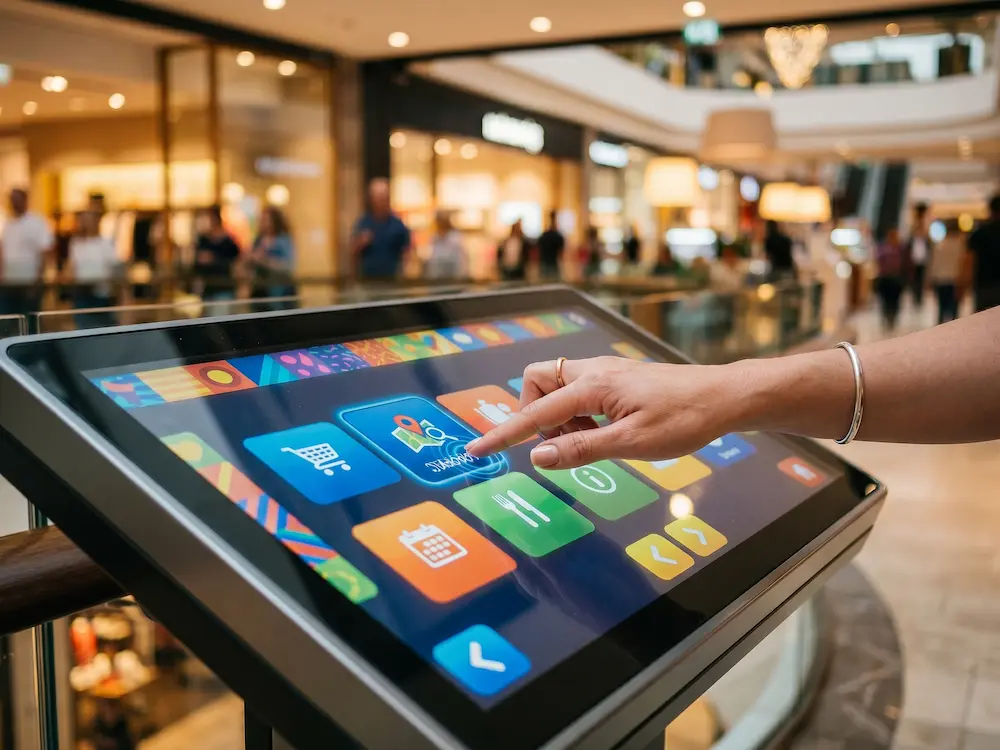

From self-ordering screens at your favourite mamak chain to check-in terminals at the hospital, the interactive kiosk has quietly become part of everyday life in Malaysia. But what exactly is it, and where does it actually add value for a business?
This guide explains what an interactive kiosk is in plain terms, then walks through seven real-world uses across Malaysian businesses and government, so you can see exactly where it might fit your own operation.
What Is an Interactive Kiosk?
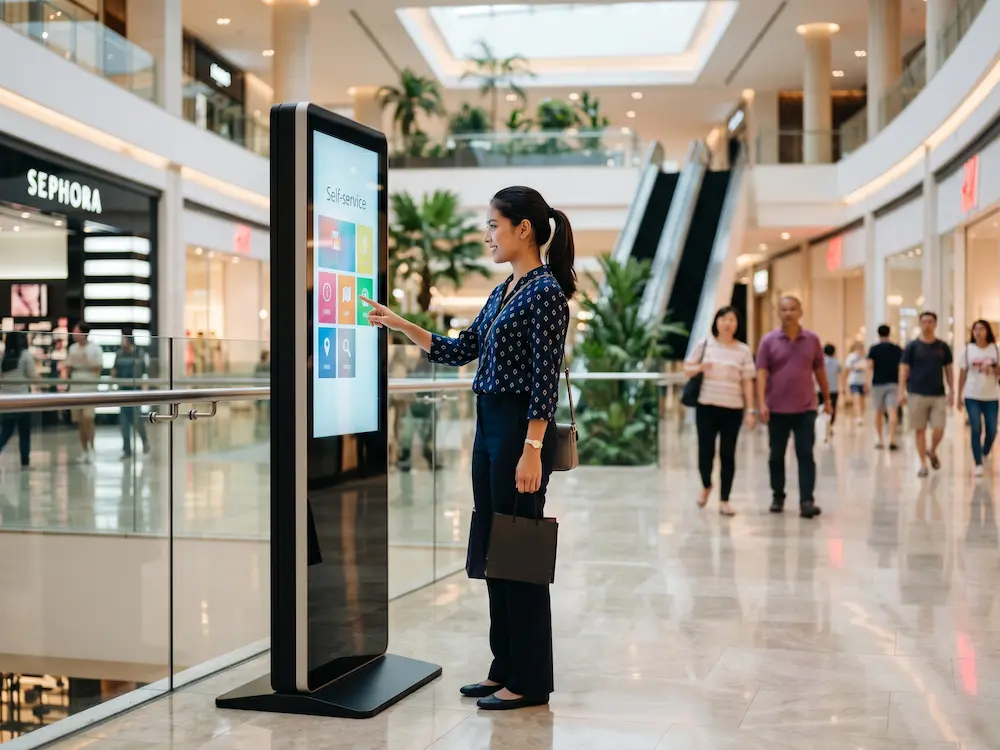
An interactive kiosk is a self-service touchscreen terminal that lets people complete a task on their own, such as ordering, checking in, finding information, or making a payment. It combines durable hardware with custom software, and comes in freestanding, wall-mounted, countertop, and outdoor formats to suit different spaces.
Under the hood, it pairs a commercial-grade touchscreen with a small computer and purpose-built software. Depending on the job, it can also include a card reader, receipt printer, barcode scanner, or camera. Good units are designed for accessibility too, with clear menus and multi-language support that suits Malaysia’s diverse users, so even first-time visitors can use them without help.
7 Real-World Uses for Interactive Kiosks in Malaysia
1. Retail and shopping malls
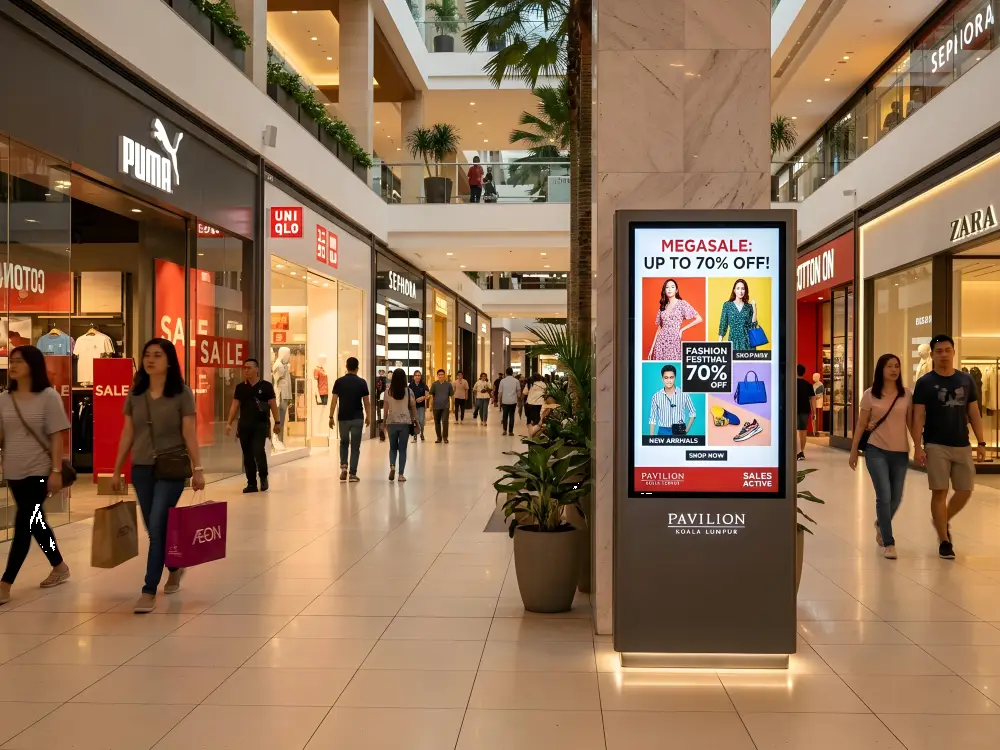
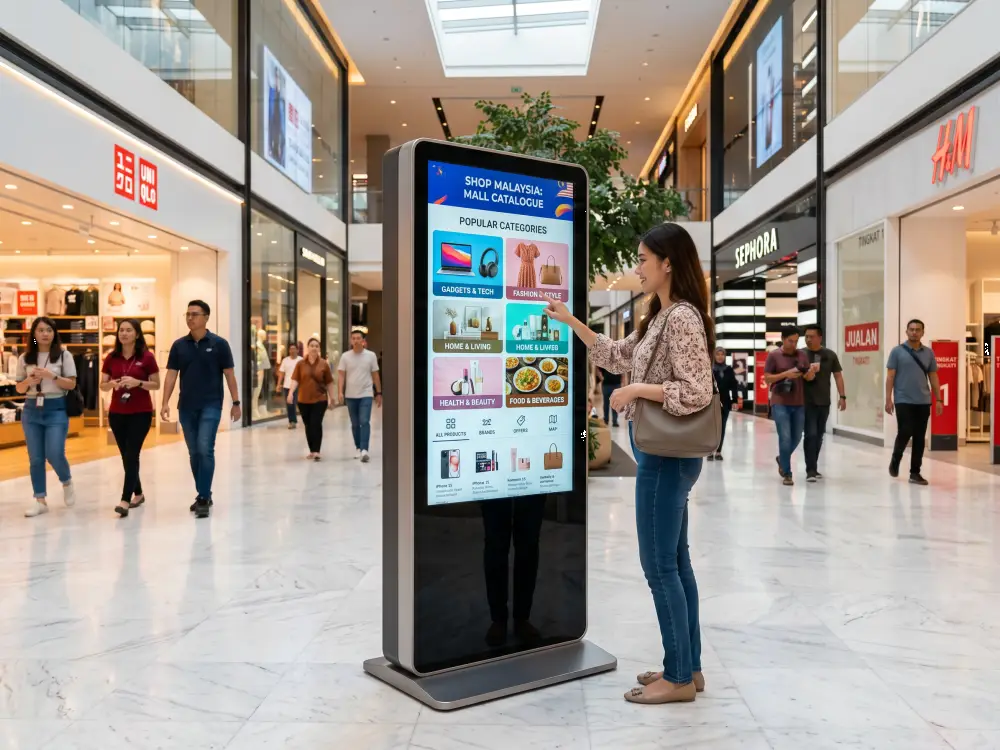
In malls and retail stores, kiosks handle self-checkout, product lookup, and promotions, letting shoppers help themselves while staff focus on higher-value service.
2. Food and beverage
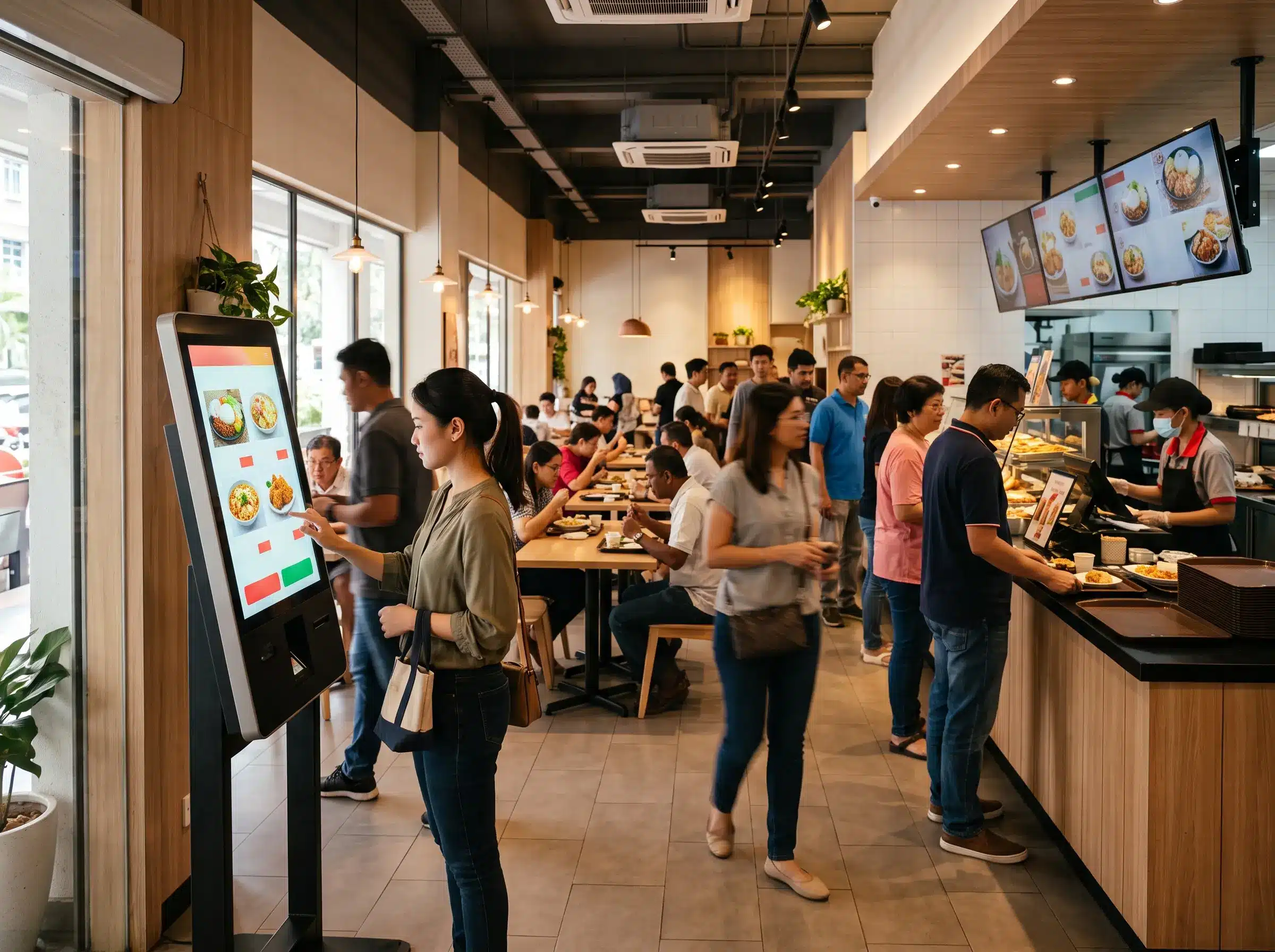
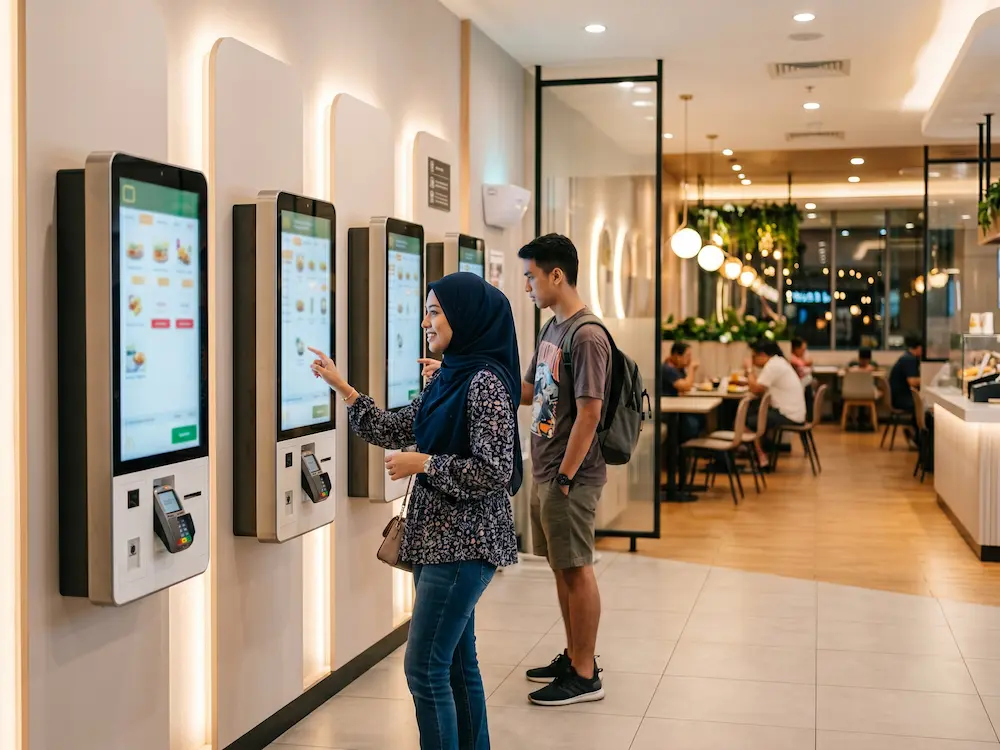
Self-ordering kiosks are now common in Malaysian cafes and fast-food outlets. Customers browse the full menu, customise orders, and pay without queueing at the counter, which speeds up service and tends to lift average order value.
3. Government and service counters
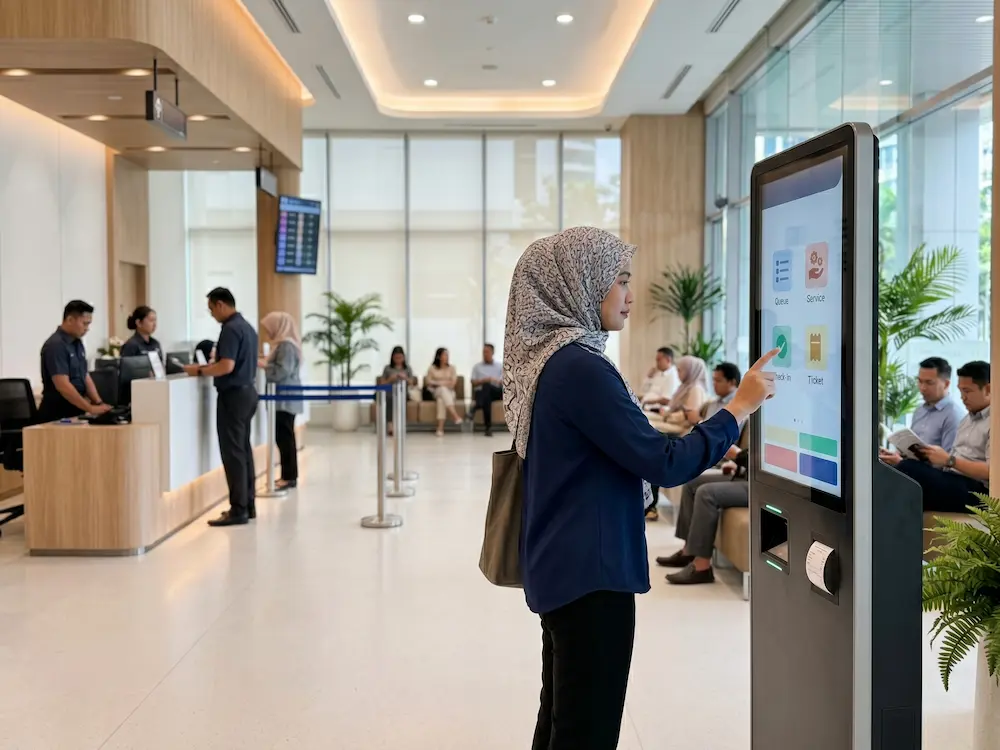
Government agencies use kiosks for queue ticketing, form submission, and e-services, reducing crowding at counters and freeing officers from repetitive tasks.
4. Healthcare and hospitals
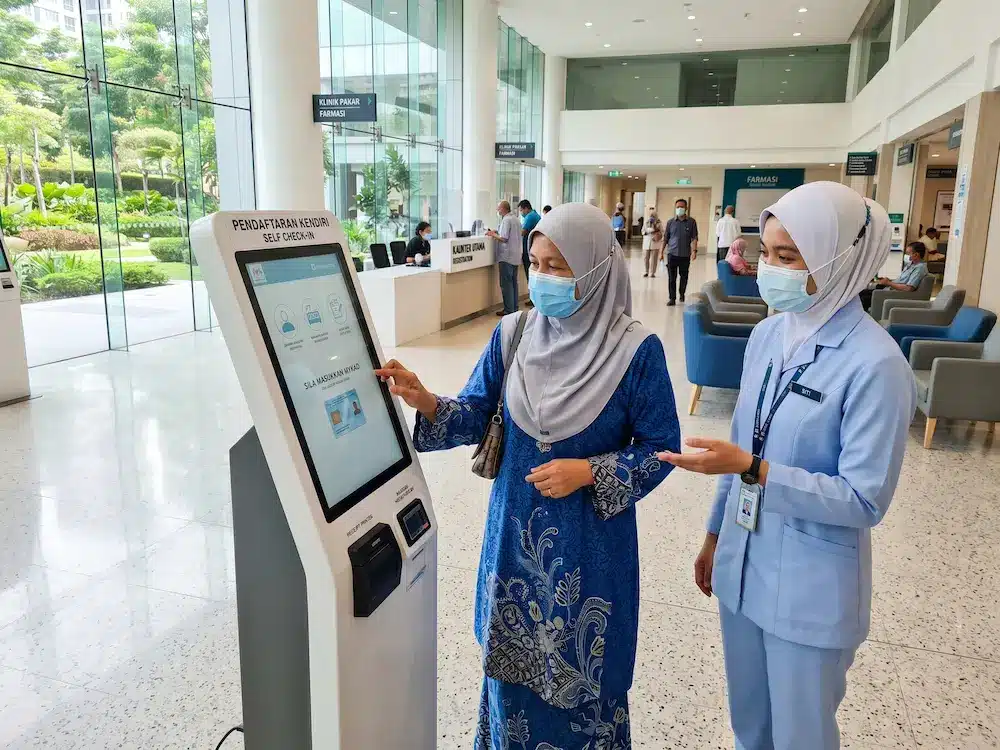
Hospitals and clinics use check-in kiosks for patient registration and appointment confirmation, cutting waiting-room queues and reducing paperwork for front-desk staff.
5. Hospitality and hotels
Hotels deploy self check-in and check-out kiosks so guests can collect key cards and settle bills quickly, even outside front-desk hours.
6. Transport hubs
At stations and terminals, these screens handle ticketing, card top-ups, and wayfinding, keeping passengers moving smoothly during peak hours.
7. Corporate and building lobbies
In corporate lobbies, visitor-management terminals register guests, print passes, and notify hosts automatically, creating a modern and secure first impression.
Why Businesses Choose Interactive Kiosks
Across all of these scenarios, the appeal is the same. These kiosks cut queues, reduce repetitive workload on staff, operate accurately around the clock, and capture useful data on how customers interact. For high-traffic Malaysian businesses, that adds up to lower running costs and a smoother customer experience.
There is a staffing angle as well. Rather than replacing people, these systems take over the repetitive, high-volume tasks, such as standard orders or printing tickets, so your team can focus on the customers who genuinely need a human touch. During busy periods, that is often the difference between long, frustrating queues and a calm, fast-moving floor that keeps people coming back.
Choosing the Right Kiosk: Indoor or Outdoor
Self-service terminals come in both indoor and outdoor builds, and choosing correctly matters. Indoor units suit malls, lobbies, and clinics, where a clean look and a smooth, responsive touchscreen matter most. Outdoor builds are tougher, with brighter, sunlight-readable screens and weatherproof, vandal-resistant casing for car parks, drive-throughs, and open public areas. Matching the build to the environment is what keeps it reliable for years, even in Malaysia’s heat and heavy rain.
Arvia’s Interactive Kiosk Solutions in Malaysia
Arvia supplies and deploys interactive kiosk solutions across Malaysia, built and supported locally, SIRIM certified, and backed by a 2-year warranty with nationwide service. Many setups pair a kiosk with digital signage for promotions, or a wider touchscreen solution for staff-facing terminals. Every project starts with a free site survey.
Thinking about self-service for your business?
Arvia will recommend the right interactive kiosk for your space and workflow, with a free site survey anywhere in Malaysia.
Final Thoughts
An interactive kiosk is simply a tool that lets people serve themselves, and in a busy Malaysian market that translates into shorter queues, lower costs, and happier customers. Whether for retail, government, healthcare, or hospitality, the right kiosk pays for itself surprisingly quickly.