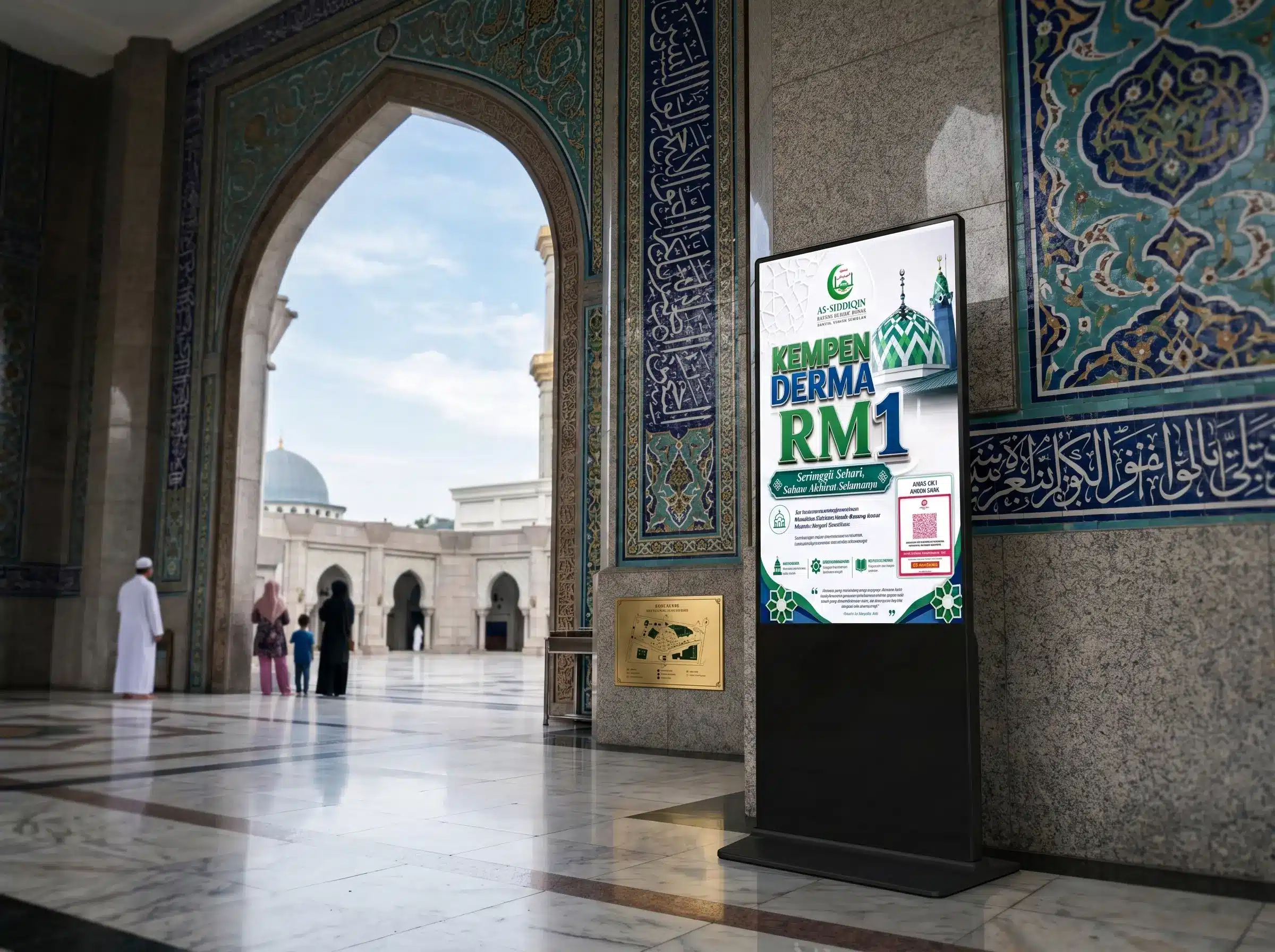
A customer pauses outside a store, glances at a screen showing a limited-time offer, and walks in with a clearer reason to buy. That is the practical value of
digital signage for retail stores: it puts relevant information in front of shoppers at the moment it can influence a decision. But a screen alone does not create that outcome. Retail teams need the right content, placement, management process, and technical support behind it.
For multi-location retailers, F&B operators, automotive showrooms, and property-based stores, digital signage can turn disconnected promotions into a coordinated customer communication system. It can help teams launch campaigns faster, reduce reliance on printed materials, improve wayfinding, and give store staff more time to focus on customers.
Why Digital Signage for Retail Stores Delivers More Than Advertising
Printed posters are familiar, but they are slow to replace, difficult to standardize across branches, and often become outdated before a campaign ends. Digital displays give retail operators more control. A head office team can schedule a campaign by store, daypart, product category, or location, while local teams continue serving customers instead of changing promotional materials manually.
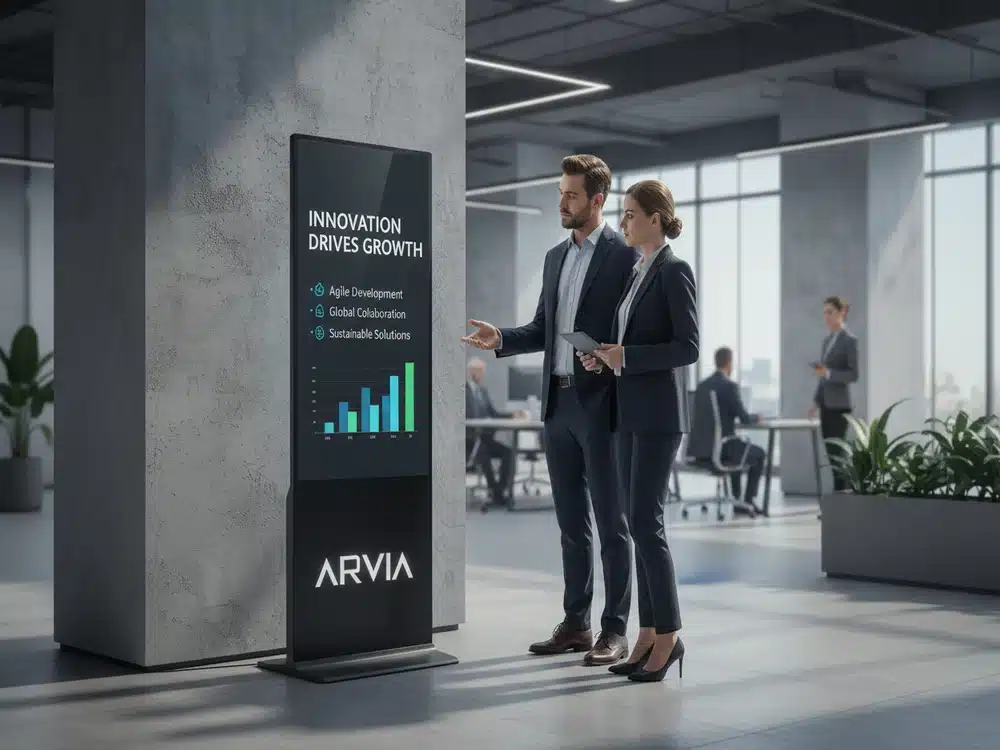
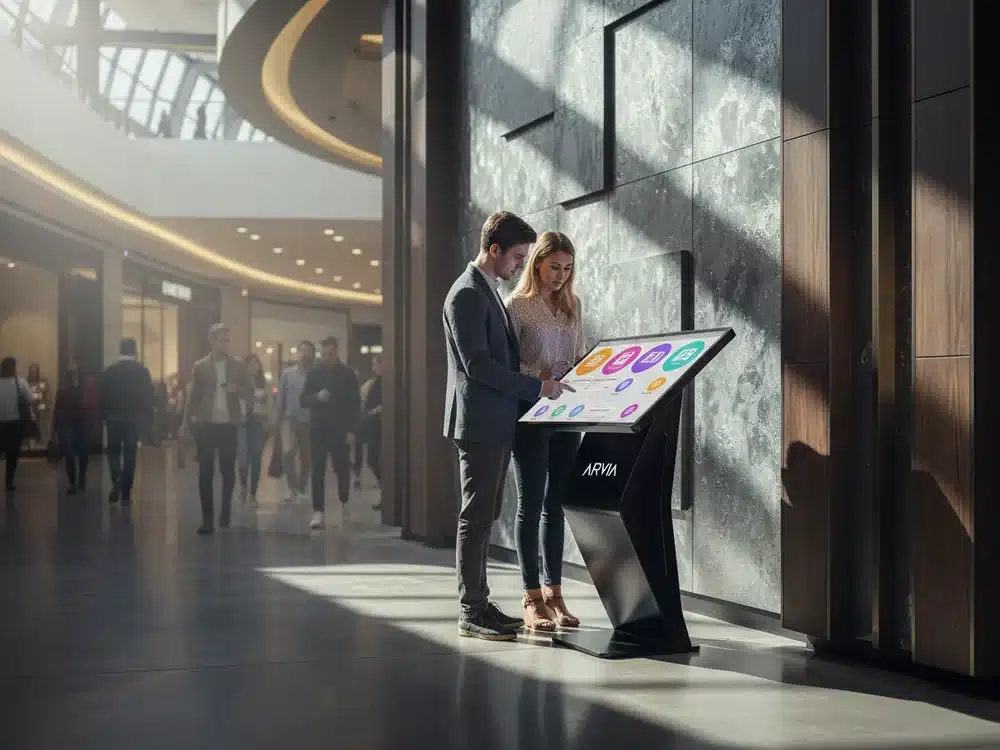
The strongest retail deployments do more than run a looping advertisement. They support the full customer journey. A storefront LED display can attract attention from passing traffic. An in-store commercial display can introduce current promotions or explain product features. A touchscreen kiosk can help customers browse a catalog, compare options, register for a loyalty program, or find another branch with available stock.
This matters most when a retailer has frequent price updates, seasonal campaigns, multiple outlets, or products that need explanation. Electronics, furniture, automotive, beauty, fashion, telecommunications, pharmacies, and food service businesses all face different challenges, but each benefits when communication is current, clear, and consistent.
Start With the Customer Journey, Not the Screen Size
A common mistake is selecting a display before defining what the customer should do after seeing it. The better starting point is the retail journey: what customers need to notice, understand, decide, and act on at each point in the store.
At the storefront, the goal may be awareness. A bright LED display can feature new arrivals, event announcements, promotions, and brand visuals that remain visible from a distance. Near the entrance, content can set expectations by presenting a promotion, explaining a membership benefit, or directing shoppers to a featured category.
At the shelf or product zone, the task changes. Customers may need help understanding the difference between models, bundles, financing options, ingredients, or service packages. Here, digital signage should answer simple questions quickly. Short product demonstrations, benefit-led comparisons, and QR-enabled calls to action can be more useful than a general brand video.
At checkout, the opportunity is often add-on sales and service information. Displays can promote gift cards, accessories, delivery services, loyalty rewards, or upcoming campaigns without requiring staff to repeat the same message throughout the day.
For larger stores, malls, showrooms, and mixed-use properties, wayfinding is equally valuable. An interactive directory can direct visitors to tenants, departments, promotions, restrooms, service counters, and events. This reduces confusion while giving operators a flexible channel for paid tenant advertising or campaign announcements.
Choose Display Types Based on the Job They Need to Do
Retail environments are visually demanding. Lighting, viewing distance, foot traffic, store layout, and operating hours all affect the technology selection. A display that performs well in a meeting room may not be suitable for a sunlit storefront or a high-traffic concourse.
Commercial-grade LCD displays are a practical choice for indoor promotions, menu boards, product information, and queue management. They are available in a range of sizes and can operate for extended hours when specified correctly. For retail windows and outdoor-facing applications, brightness becomes critical. A standard indoor screen may appear washed out in direct daylight, which weakens the campaign and wastes the investment.
LED displays are often better suited to high-visibility storefronts, large retail atriums, showrooms, and event spaces. Their scale and brightness can create stronger impact from a distance. However, LED is not automatically the right choice for every site. Pixel pitch, viewing distance, installation structure, electrical requirements, and maintenance access must be considered before specifying the display.
Interactive kiosks and touchscreens are useful when customers need to search, compare, register, place an inquiry, or navigate a space. They can reduce pressure on frontline teams, but only when the interface is simple and the content stays updated. A poorly designed kiosk can create another point of frustration rather than better service.
Build Content Around Retail Moments
Retail content needs a different discipline from corporate presentation content. Customers usually have seconds, not minutes, to understand the message. A screen should communicate one idea at a time through readable text, strong imagery, and a clear next step.
A useful content schedule often balances promotional messages with practical information. A restaurant may rotate meal bundles, wait-time updates, app ordering prompts, and menu highlights. A fashion retailer may show new collections, styling combinations, member benefits, and limited-stock alerts. An
automotive showroom may use screens to demonstrate model features, finance packages, test-drive invitations, and after-sales service reminders.
Motion can attract attention, but constant fast movement can make content difficult to absorb. Sound also requires judgment. In busy retail settings, silent visual content is often more effective and less disruptive. Where video is used, captions and clear on-screen messaging should carry the essential information.
Content should also reflect the local operating context. Branch-specific offers, holiday schedules, regional events, and language requirements may differ from one store to another. Central control is valuable, but it should not prevent useful local relevance.
Make Content Management Operationally Simple
The value of a digital signage network depends on how easily teams can manage it after installation. If updating a promotion requires technical intervention every time, retail teams will return to printed materials or leave old content on screen.
A cloud-based content management platform allows authorized users to schedule media remotely, organize templates, assign content to selected locations, and set publishing times. For a retailer with multiple branches, this means a national campaign can launch in the morning while individual stores retain approved local content where necessary.
Governance matters as much as access. Retail operators should decide who can publish content, who approves pricing and promotional claims, how emergency notices are handled, and how expired campaigns are removed. The following operating practices prevent many common issues:
- Create approved templates for promotions, price messages, menus, and store announcements.
- Set start and end dates for every campaign so expired offers do not remain live.
- Assign clear publishing rights between head office, marketing teams, and branch operators.
- Review screen health and playback status regularly, especially across multiple locations.
For retailers with POS, inventory, queue, or CRM systems, integration can add further value. For example, a display can reflect time-based menu availability, promote items with sufficient inventory, or present queue information. These projects require careful planning because data accuracy, security, and operational ownership all affect the result.
Measure What Changes on the Floor
Digital signage should be treated as an operating investment, not a decorative fit-out. The measures that matter depend on the objective. A storefront campaign may be assessed through footfall or store-entry patterns. A product-zone display may be evaluated through featured-item sales, attachment rate, or staff feedback. A wayfinding system may be measured by fewer repetitive visitor inquiries and improved tenant visibility.
Direct attribution is not always simple. A customer may see a screen, speak with a salesperson, and complete a purchase later. That does not make measurement impossible. Retail teams can compare performance before and after a campaign, test content across selected locations, use campaign-specific QR codes, and monitor sales of promoted products against comparable stores.
The best approach is to start with a defined business question. Are you trying to improve store traffic, reduce menu printing, promote a high-margin category, shorten perceived queue time, or help customers find services faster? One clear objective makes it easier to select content and evaluate results.
Plan Installation for Long-Term Reliability
Retail technology has to withstand real operating conditions: long opening hours, cleaning routines, customer traffic, variable power quality, and frequent campaign updates. This is why hardware procurement should be considered together with installation, mounting, cabling, connectivity, content management, warranty coverage, and support response.
A site survey should assess viewing angles, ambient light, power points, network availability, mounting surfaces, ceiling or wall structure, and access for future servicing. It should also account for safety, cable concealment, and the visual fit within the store design. In a mall or managed property, operators may need to comply with landlord rules, signage guidelines, and installation schedules.
For organizations deploying across locations, local accountability is especially valuable. Arvia combines display supply, systems integration, installation, and nationwide Malaysian field-engineer support, helping retail teams move from a single pilot to a managed rollout with clearer ownership. Its experience across more than 4,500 projects also supports the practical planning that larger deployments require.
A well-planned pilot is often the right first move. Install in one or two representative locations, test content performance and operational workflows, then use the findings to refine the wider rollout. The objective is not simply to place screens around a store. It is to give every customer-facing message a clear purpose, an owner, and a reason to stay current.