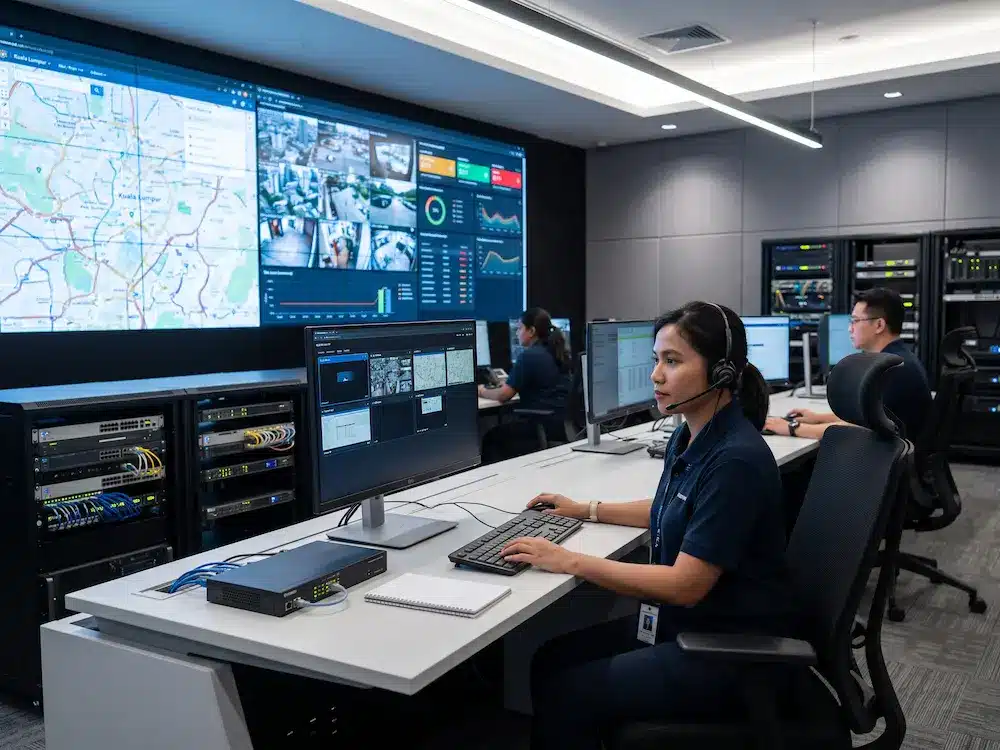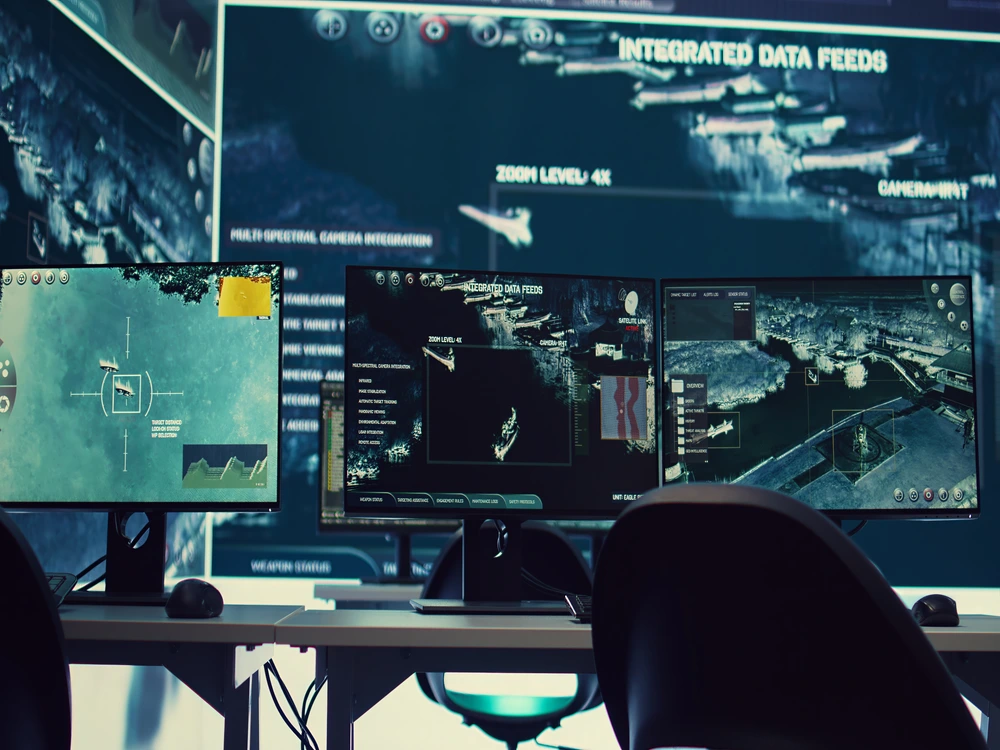
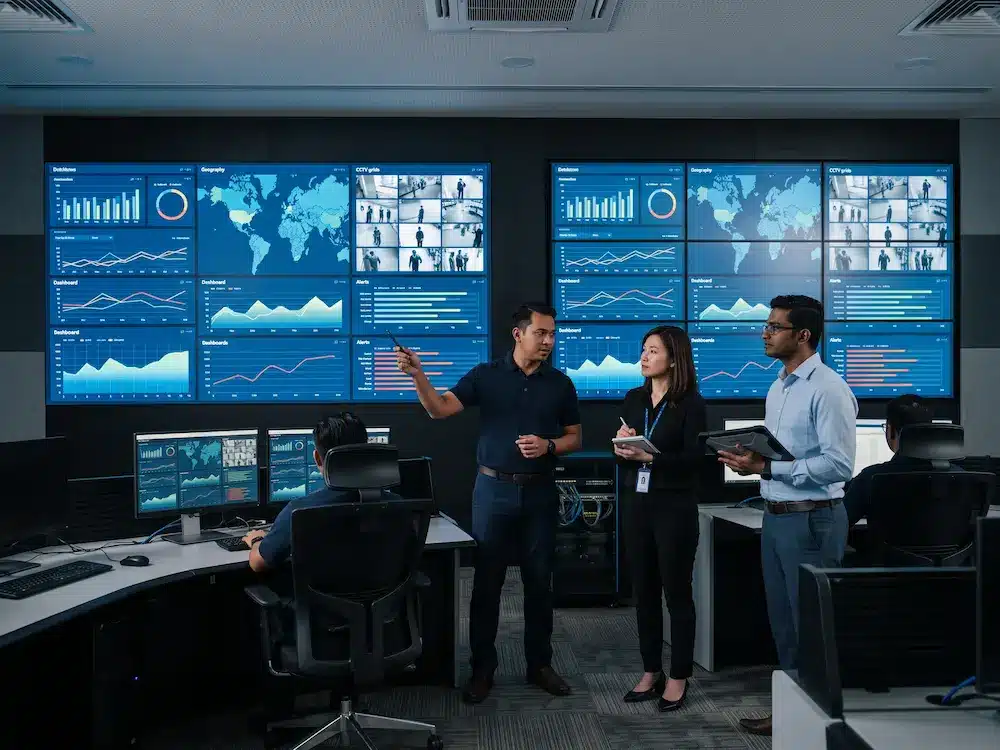

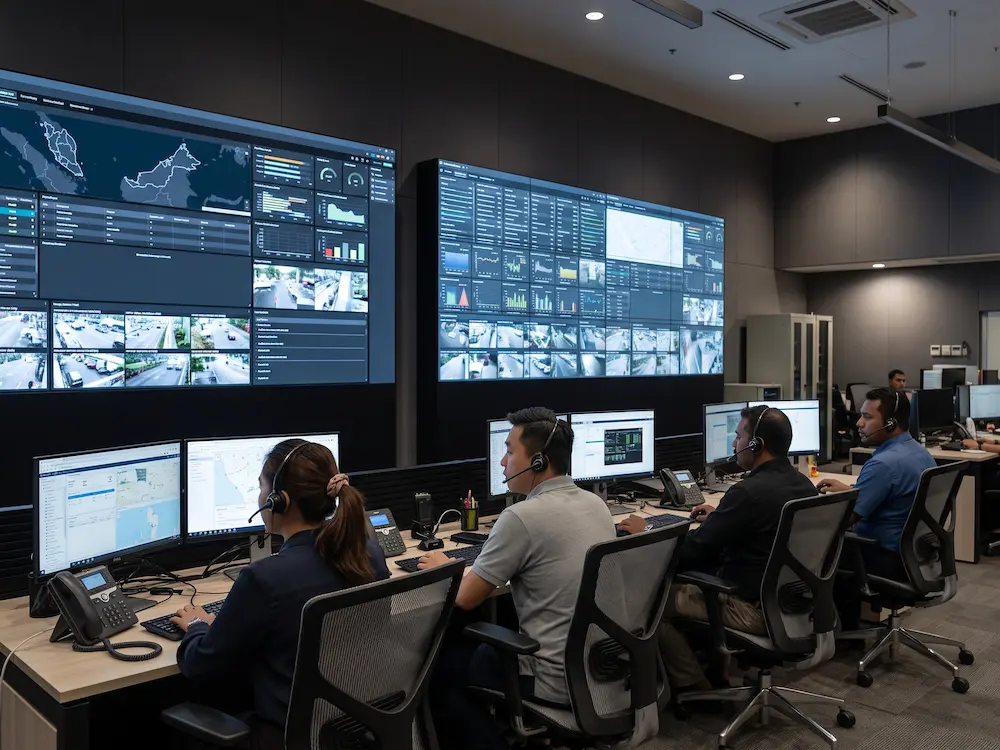
Choosing between an LED vs LCD video wall is one of the most important display decisions in a command center project. Both technologies can present multiple sources, dashboards, CCTV feeds, maps, and operational alerts, but they differ in image continuity, viewing distance, maintenance, brightness, room requirements, and long-term cost.
The right choice depends on how close operators sit, how much information appears on screen, whether visible bezels are acceptable, and how the room will operate every day. This guide explains seven essential differences for Malaysian organisations planning a control room, operations centre, security room, or monitoring environment.
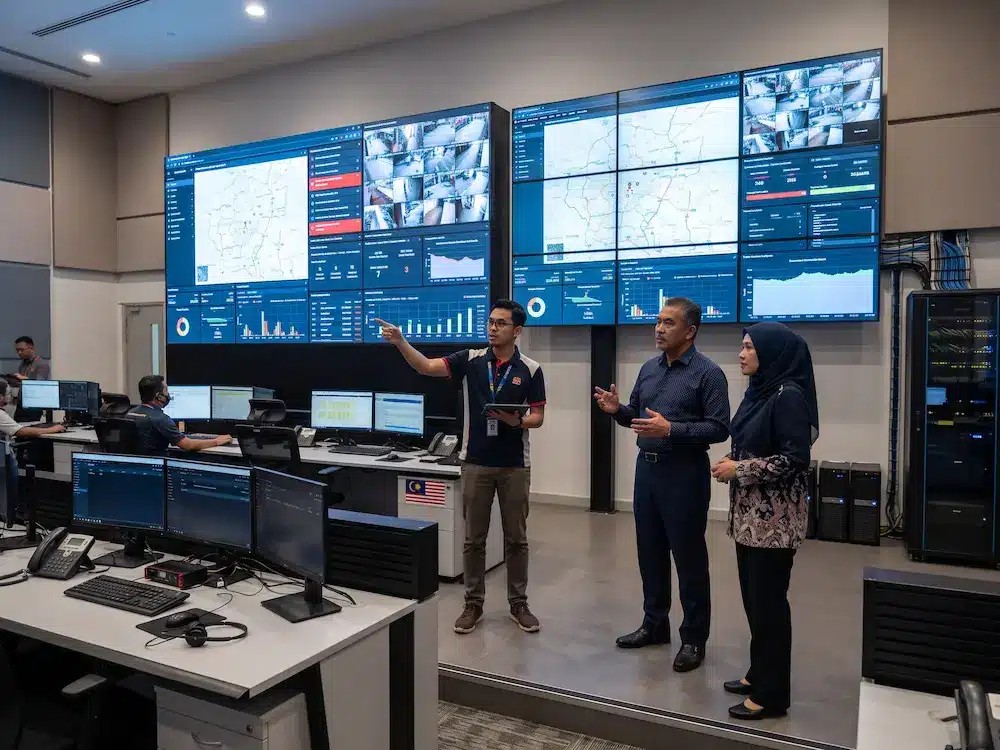
What Is the Difference Between LED and LCD Video Walls?
An LCD video wall is built from several professional display panels installed closely together. Each panel has its own frame, so thin border lines remain visible between screens. An LED wall is assembled from modular LED cabinets or panels that create one continuous canvas without the same panel borders.
For most projects, an LED vs LCD video wall assessment begins with the content that operators must read and the distance from which they will view it. Both systems can be managed by a video wall controller that arranges content from multiple sources. The wider concept is often described as a
video wall,
where several display modules work together as one large visual surface. The practical difference is how each technology presents that surface to operators.
LED vs LCD Video Wall: 7 Essential Differences
1. Seamless Image vs Visible Bezels
LED walls provide a more continuous image because the modules join without the thick frame lines found between LCD panels. This can improve the presentation of large maps, live camera views, diagrams, and wide dashboards. LCD bezels are much thinner than standard television borders, but they still divide the image into sections.
2. Close-Range Detail and Pixel Pitch
LCD panels normally deliver fine detail at close viewing distances, which can be useful when operators need to read small text, tables, or dense technical interfaces. LED image detail depends on pixel pitch. A finer pitch improves close-range clarity but usually increases the investment. The LED vs LCD video wall decision should therefore include the actual distance between the first operator row and the display.
3. Brightness and Ambient Light
LED can provide strong brightness and visual impact in larger rooms or spaces with higher ambient light. LCD is often comfortable in controlled indoor environments where lighting is designed around the displays. Excessive brightness can create fatigue during long shifts, so the objective is not simply to choose the brightest screen. Brightness control, glare, contrast, and room lighting should be planned together.
4. Shape, Size, and Installation Flexibility
LED modules can be combined into wider, taller, or more customised formats. This flexibility is useful when the display must fit a specific feature wall or achieve an unusual aspect ratio. LCD video walls follow the fixed dimensions of each panel, so the final shape is based on a grid such as 2 by 2, 3 by 3, or 4 by 2.
5. Maintenance and Module Replacement
The LED vs LCD video wall comparison also changes when maintenance access is limited. Both systems require access for servicing. LED walls can allow individual modules, power supplies, or receiving cards to be serviced. LCD walls may require a complete panel to be removed or replaced. Front-service and rear-service access should be confirmed before installation because it affects wall depth, structure, and recovery time.
6. Image Consistency Over Time
Multi-panel displays must maintain consistent brightness and colour. LCD panels may develop visible differences between units as they age. LED modules also require calibration, especially after a replacement. A professional maintenance process should include colour matching, brightness balancing, spare-part planning, and routine inspection.
7. Initial Cost and Long-Term Value
LCD video walls may provide a practical entry point for smaller rooms and close-range monitoring. Fine-pitch LED may require a higher initial budget, but it can deliver a seamless canvas, flexible sizing, and strong long-term visual impact. The best LED vs LCD video wall comparison should include structure, controller, installation, power, cooling, maintenance, spare parts, and expected operating life, not only the panel price.
LED vs LCD Video Wall Comparison Table
| Factor | LED Wall | LCD Video Wall |
|---|---|---|
| Visual continuity | Seamless appearance | Thin bezels remain visible |
| Close viewing | Depends on pixel pitch | Strong fine-detail performance |
| Custom sizing | Highly flexible | Based on fixed panel grids |
| Maintenance | Module-level servicing | Panel-level servicing |
| Typical fit | Large seamless command walls | Smaller close-view monitoring rooms |
Which Video Wall Is Better for a Control Room?
There is no single answer for every project. LED is often preferred when the room needs a large seamless image, flexible dimensions, or strong visual impact. LCD may be suitable when operators sit close, text detail is critical, space is limited, or the project needs a more structured panel grid.
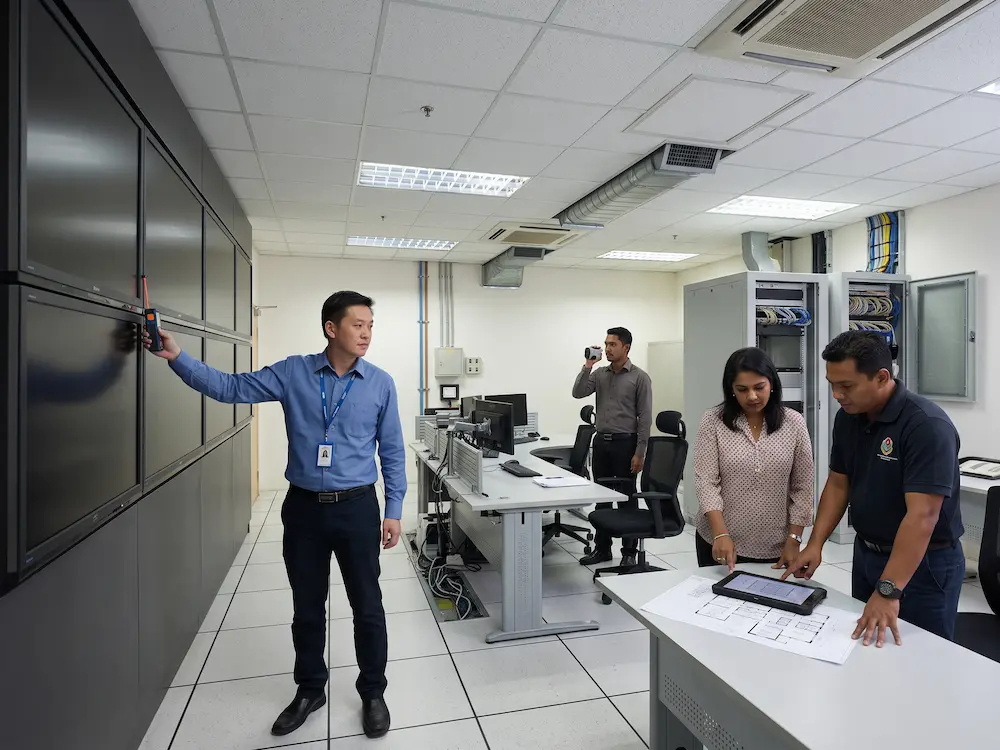
Before procurement, document the LED vs LCD video wall requirement in the project brief. A site assessment should review the room depth, operator positions, content type, source resolution, wall structure, maintenance access, and future expansion. The chosen display should also work with the controller, KVM system, network, and room workflow described in a complete
command center solution.
Arvia Video Wall Solutions in Malaysia
Arvia supports command center and control room projects with display planning, video wall controllers, source management, KVM, operator workstations, installation, testing, and user training. The team can compare LED and LCD requirements based on the viewing distance, information density, room conditions, and operating priorities.
Organisations can also review Arvia’s
LED screen display solutions
for seamless large-format installations. A professional consultation helps ensure the final LED vs LCD video wall recommendation is based on the room and workflow rather than only the equipment price.
Need help comparing LED and LCD?
Share your room size, viewing distance, content sources, and operating requirements with Arvia for a practical video wall recommendation.
Final Thoughts
The LED vs LCD video wall decision should be based on how operators use the room. Image continuity, close-range detail, brightness, maintenance, installation flexibility, and long-term cost all influence the final result.
By assessing the environment before selecting hardware, Malaysian organisations can choose a video wall that remains readable, serviceable, and reliable throughout daily operations. The strongest solution is the one that supports the real monitoring workflow without adding unnecessary complexity.