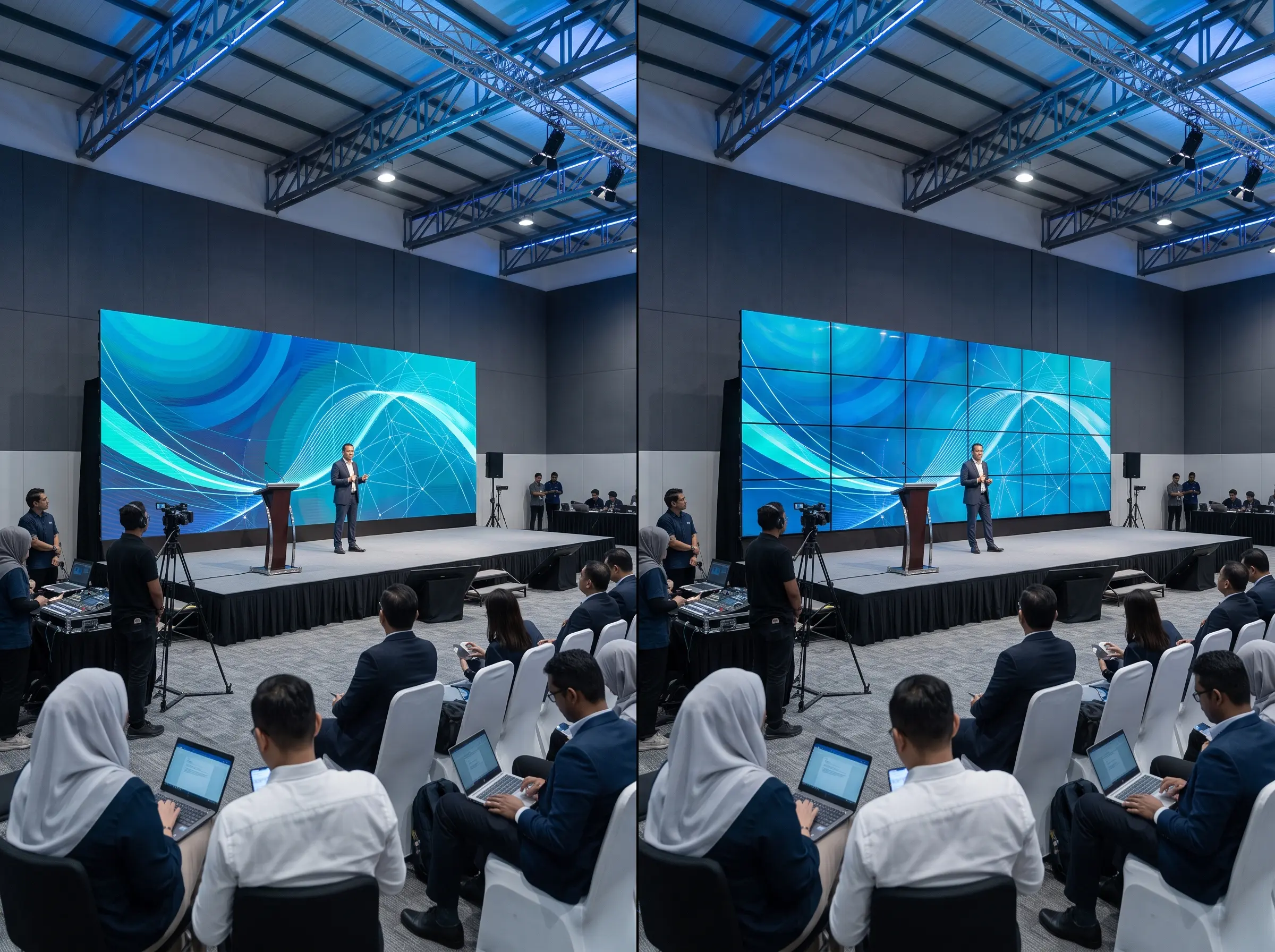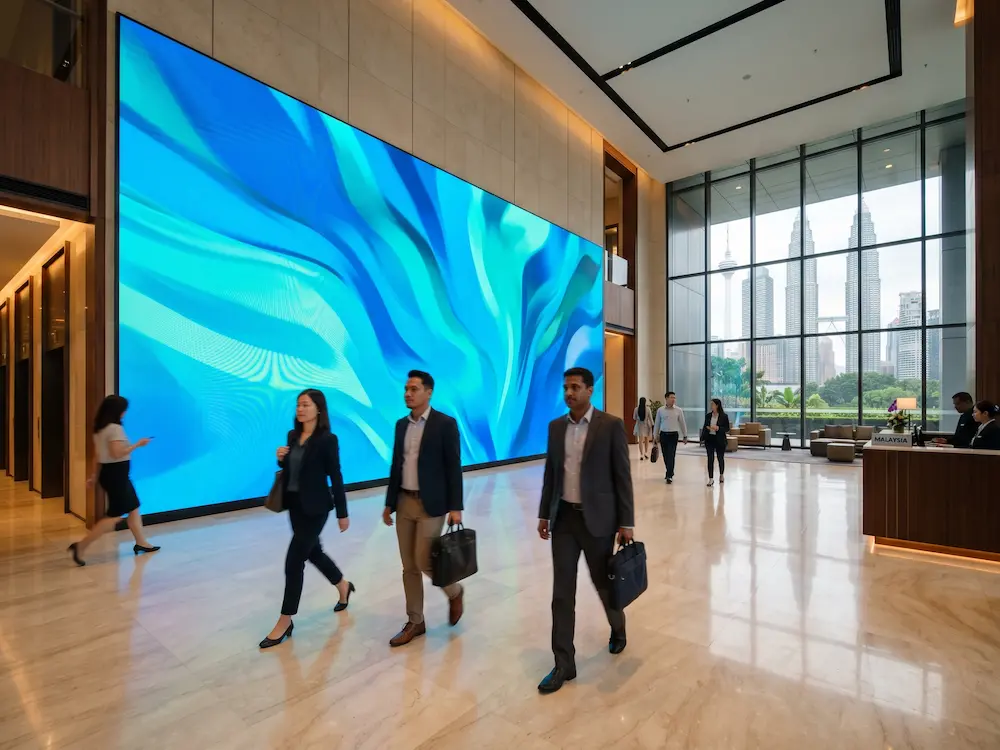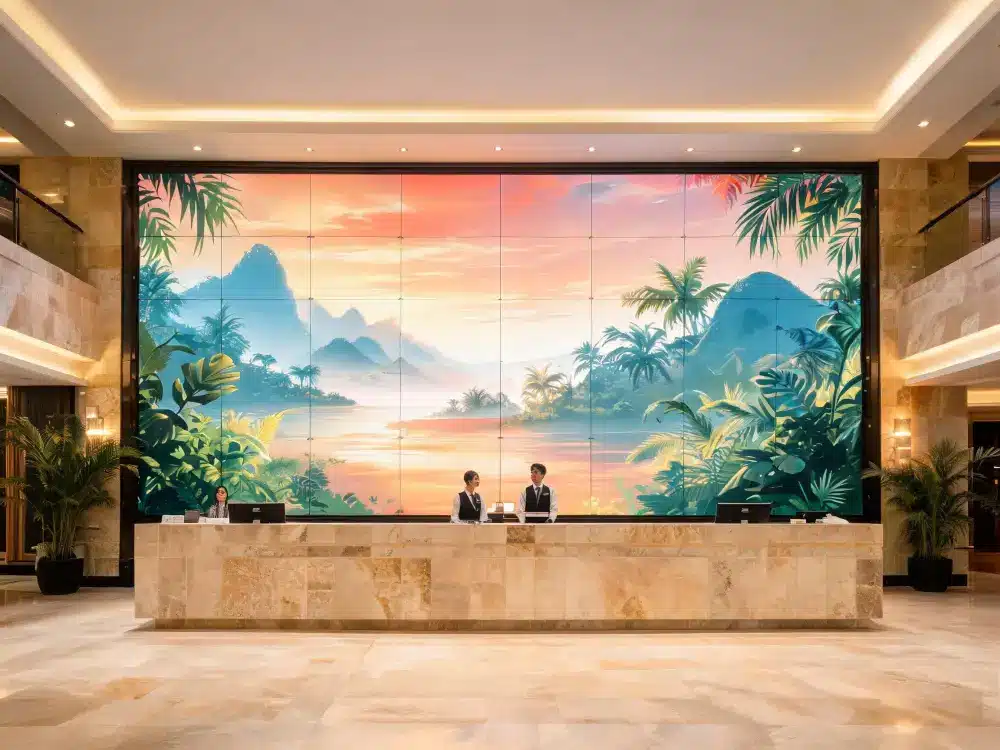
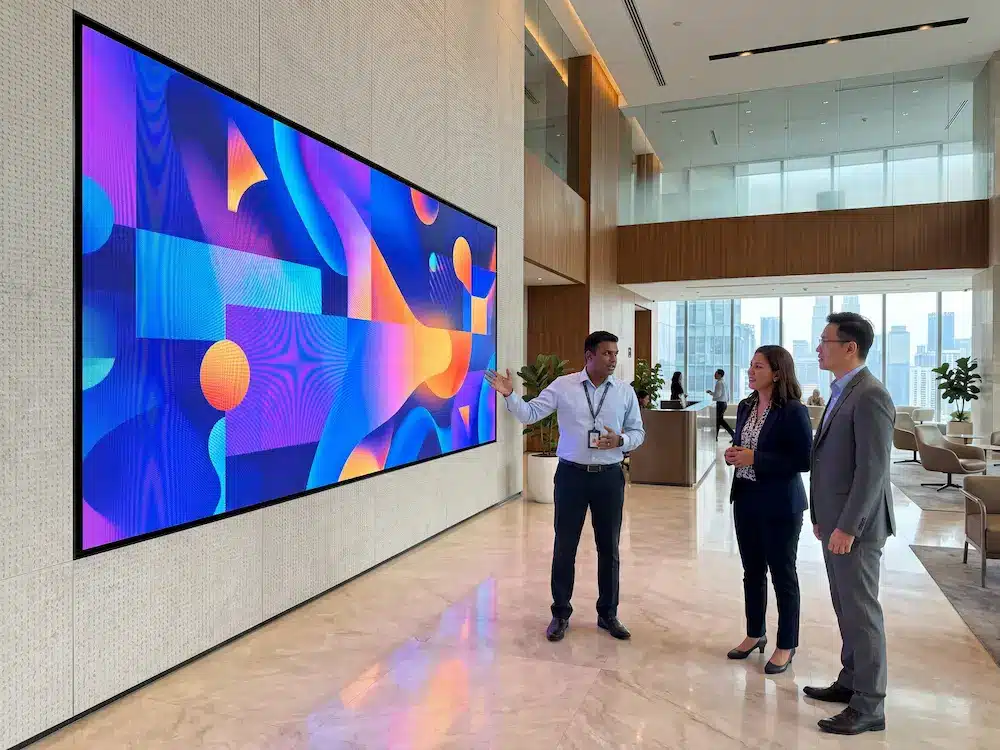

An LED screen display can turn an empty wall, stage, lobby, or outdoor frontage into a powerful communication space. Unlike a standard television, an LED screen is built from modular panels that can be combined into different sizes and shapes. This gives organisations more freedom to create large-format visuals for advertising, events, public information, command centres, auditoriums, and corporate environments.
However, choosing the right system involves more than selecting a large screen. Pixel pitch, viewing distance, brightness, installation structure, content format, maintenance access, and operating environment all affect the final result. This guide explains the key decisions that Malaysian organisations should review before investing in an LED screen project.
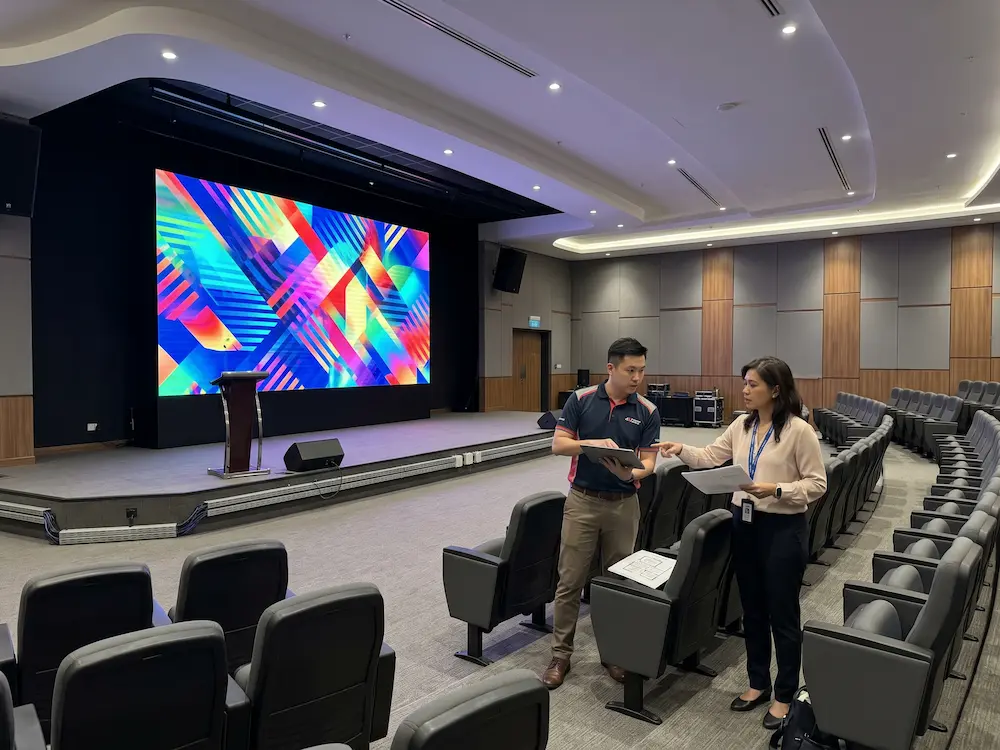
What Is an LED Screen Display?
An LED screen display is a large visual system made from individual light-emitting diode modules. These modules are joined together to create one continuous image without the thick borders normally seen between multiple LCD panels. The modular design allows the screen to be customised for a wide stage backdrop, a tall lobby feature, a curved installation, or a large outdoor wall.
The technology is part of the wider category of
LED displays.
Because each pixel produces its own light, the screen can achieve strong brightness and vivid colour. This makes it suitable for spaces where a conventional projector may struggle with ambient light or where a much larger image is required.
Indoor vs Outdoor LED Screen Display
The first decision is whether the installation is indoor or outdoor. Indoor panels usually prioritise finer image detail because viewers may stand closer to the screen. They are commonly installed in auditoriums, retail stores, meeting halls, houses of worship, control rooms, and event venues.
Outdoor systems require higher brightness and stronger protection against rain, dust, heat, and changing weather conditions. The cabinet, ventilation, electrical system, and maintenance access must be planned for continuous exposure. A screen intended for a shaded building entrance will have different requirements from one facing direct afternoon sunlight.
Pixel Pitch and Viewing Distance
Pixel pitch describes the distance between the centres of neighbouring LED pixels, measured in millimetres. A smaller number means the pixels are closer together, creating a finer image for viewers standing near the display. A larger pitch may be suitable when the audience is further away.
Choosing an unnecessarily fine pitch can increase cost without creating a visible benefit. Choosing a pitch that is too wide may make text and images look rough at the intended distance. The correct LED screen display specification should therefore be based on real viewing conditions, not only a product catalogue.
| Application | Viewing Situation | Planning Priority |
|---|---|---|
| Meeting room or showroom | Close viewing | Fine detail, readable text, accurate colour |
| Auditorium or stage | Mixed viewing distances | Balance detail, screen size, camera capture, and budget |
| Outdoor frontage | Medium to long distance | Brightness, weather resistance, and structural safety |
| Large public venue | Long viewing distance | Overall visibility and content readability |
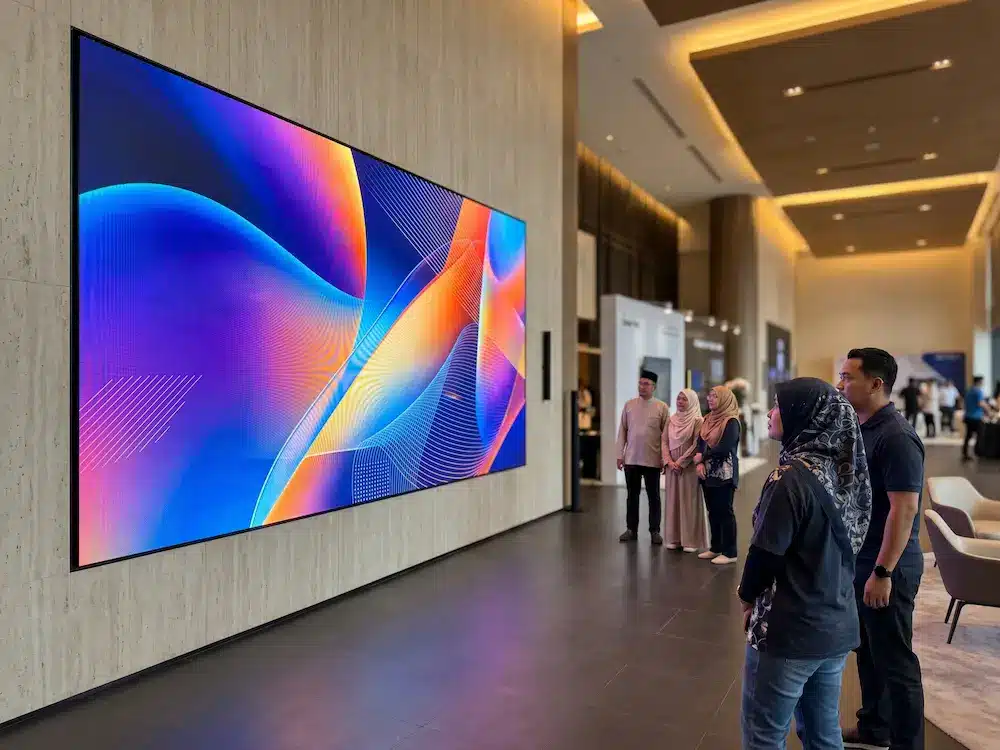
Brightness, Contrast, and Ambient Light
Brightness must match the environment. A screen inside a controlled meeting room does not need the same output as a display installed behind a glass facade or under direct sunlight. Excessive brightness indoors can be uncomfortable, while insufficient brightness outdoors can make content difficult to see.
The design team should study the direction of sunlight, surrounding lighting, viewing hours, and whether brightness control is required at night. Good contrast and proper content design are just as important as raw brightness. Clean layouts, large text, and strong visual hierarchy will remain readable from a greater distance.
Content, Control, and Daily Operation
The screen is only one part of the solution. Organisations must also decide how content will be created, scheduled, and updated. A permanent installation may connect to a digital content management system, while an event screen may receive signals from presentation laptops, cameras, switchers, or media servers.
For multi-location deployments, centralised control allows administrators to publish content, schedule playlists, review screen status, and respond quickly to urgent announcements. The LED screen display should be planned around the actual content workflow so that daily updates do not require technical assistance every time.
Installation and Structural Planning
Large LED systems require proper structural assessment. The supporting wall, frame, truss, or steel structure must carry the total weight safely. Installation depth, cable routes, ventilation, access doors, and front or rear maintenance should be confirmed before fabrication begins.
For outdoor projects, waterproofing, drainage, wind exposure, lightning protection, and local authority requirements may also affect the design. For indoor projects, ceiling height, stage layout, fire routes, air-conditioning, and camera sightlines should be considered. A professional site survey helps identify these constraints before the final quotation.
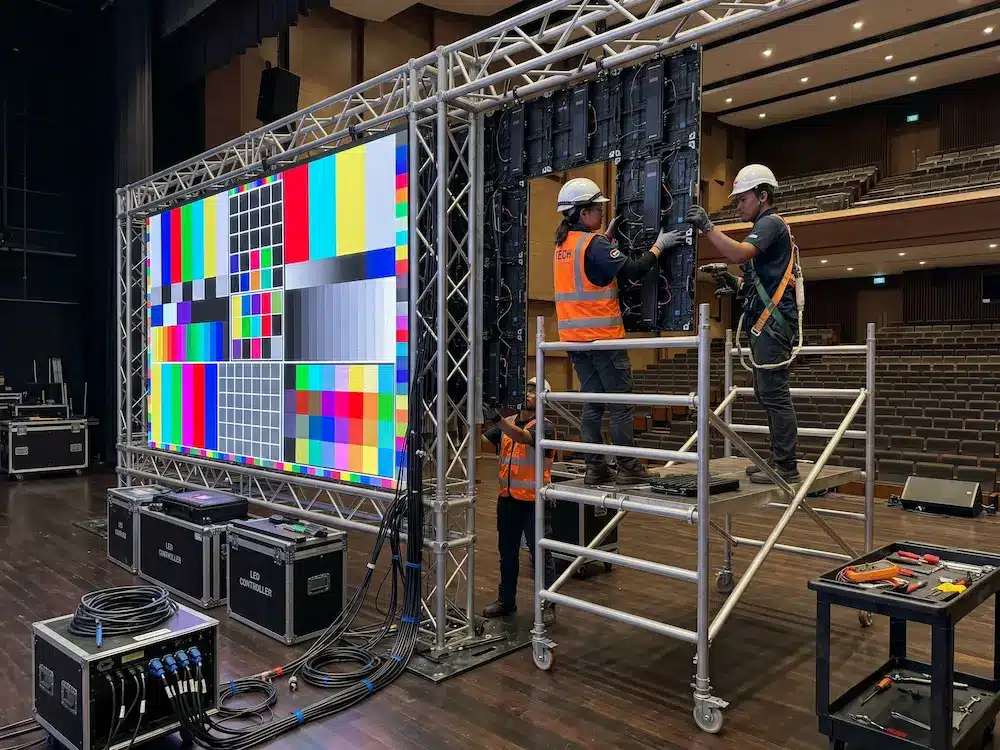
Power, Cooling, and Maintenance
Power planning should include normal consumption, peak load, circuit distribution, protection, and backup requirements. The screen and controller equipment also generate heat, so ventilation or cooling must be considered, especially inside enclosed structures.
Maintenance access is equally important. Technicians should be able to reach LED modules, power supplies, receiver cards, and cables without dismantling the entire installation. Spare modules and proper colour calibration help maintain a consistent image after repairs. A maintenance plan is especially valuable for systems used daily or installed in mission-critical locations.
Where LED Screen Display Technology Creates Value
- Corporate: lobby branding, town halls, boardrooms, and performance dashboards.
- Education: auditoriums, lecture halls, ceremonies, and campus announcements.
- Retail: storefront campaigns, promotions, product launches, and high-impact visual merchandising.
- Government: public information, operations centres, events, and community communication.
- Events: stage backdrops, live camera feeds, presentations, and sponsor visuals.
LED Screen Display Buying Checklist
- Confirm whether the installation is indoor, semi-outdoor, or fully outdoor.
- Measure the viewing distance, available wall area, and required aspect ratio.
- Select pixel pitch based on real viewing conditions.
- Review brightness, sunlight direction, and night-time operation.
- Plan the controller, input sources, content software, and network connection.
- Confirm structural support, power supply, ventilation, and maintenance access.
- Check installation, calibration, warranty, spare parts, and local technical support.
Arvia LED Screen Solutions in Malaysia
Arvia supports LED screen projects for corporate, education, retail, government, event, and public environments. The solution can be planned according to viewing distance, screen dimensions, pixel pitch, brightness, content sources, structural conditions, and maintenance requirements.
Clients can begin by visiting
Arvia’s visual technology solutions
or arranging a
showroom consultation.
A site survey allows the project team to review mounting conditions, electrical access, ambient light, viewing distance, and content workflow before recommending the final configuration.
Planning an LED screen project?
Share your location, viewing distance, screen size, and intended content with Arvia. Our team will help you plan a practical display for your environment.
Final Thoughts
The right LED screen display is a complete system, not only a collection of panels. Image quality depends on the relationship between pixel pitch, viewing distance, brightness, content, structure, power, and maintenance.
By assessing the environment before selecting hardware, organisations can avoid unnecessary cost and achieve a display that remains clear, reliable, and practical for daily use. A professional site survey and demonstration provide the strongest foundation for a successful installation.