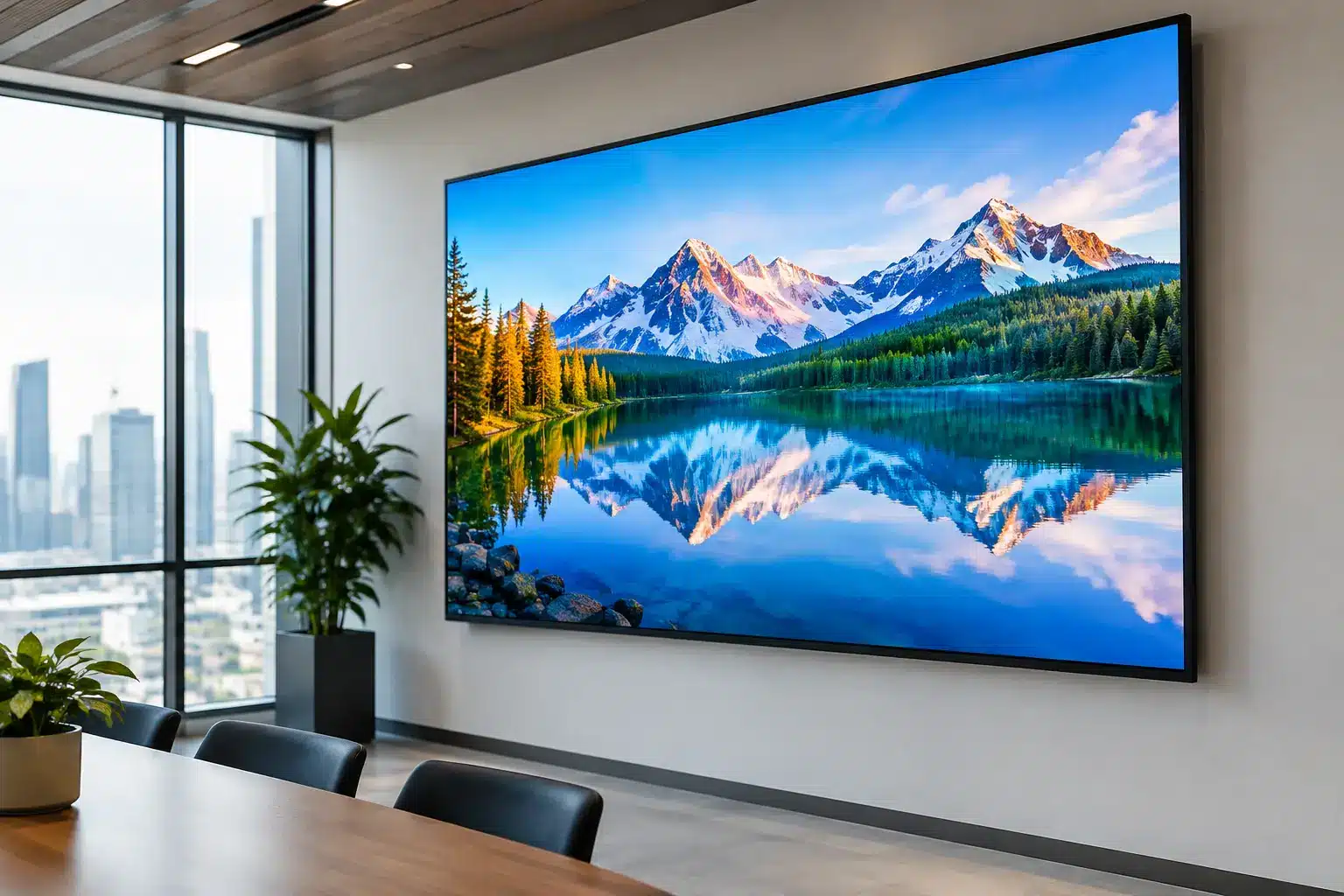
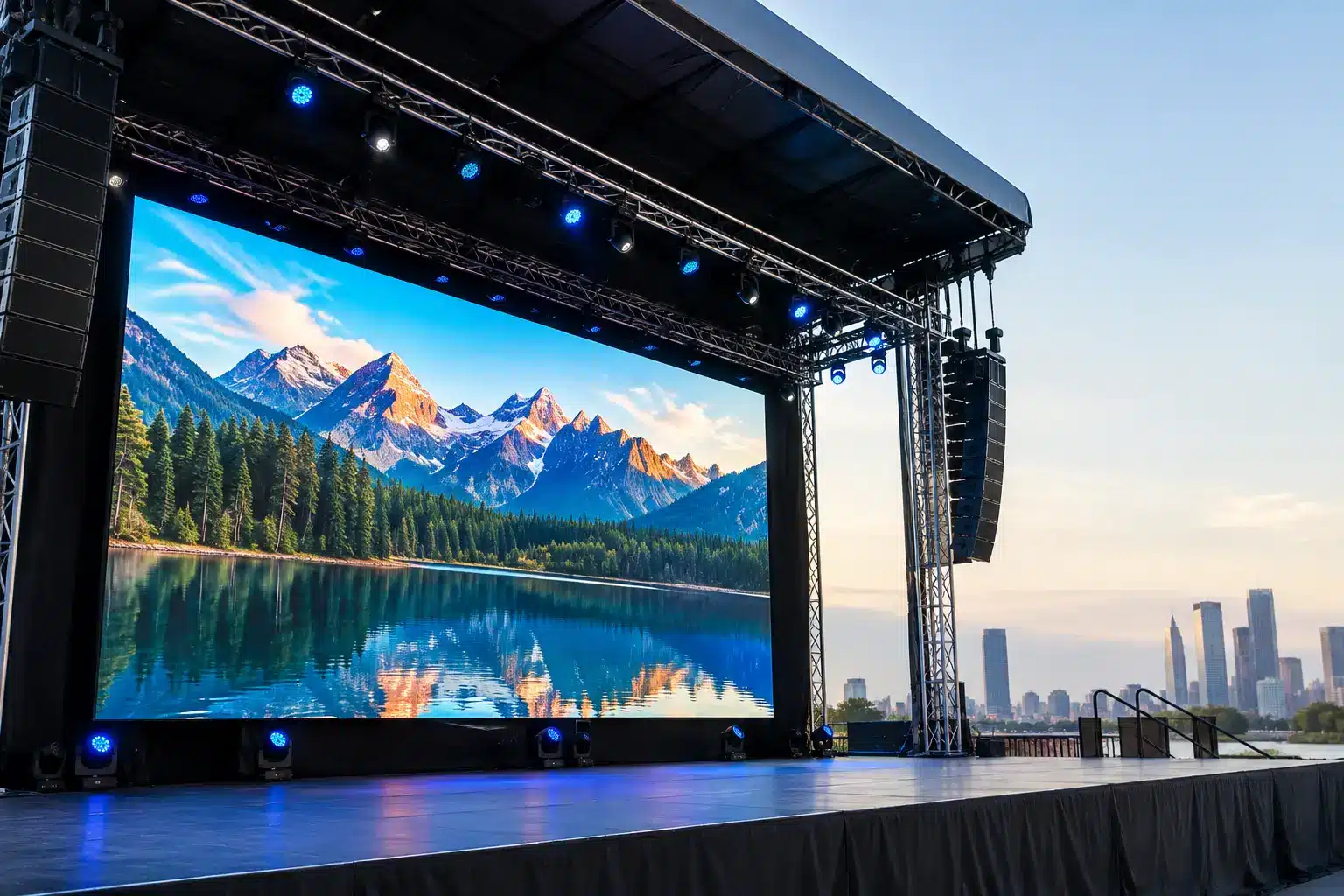
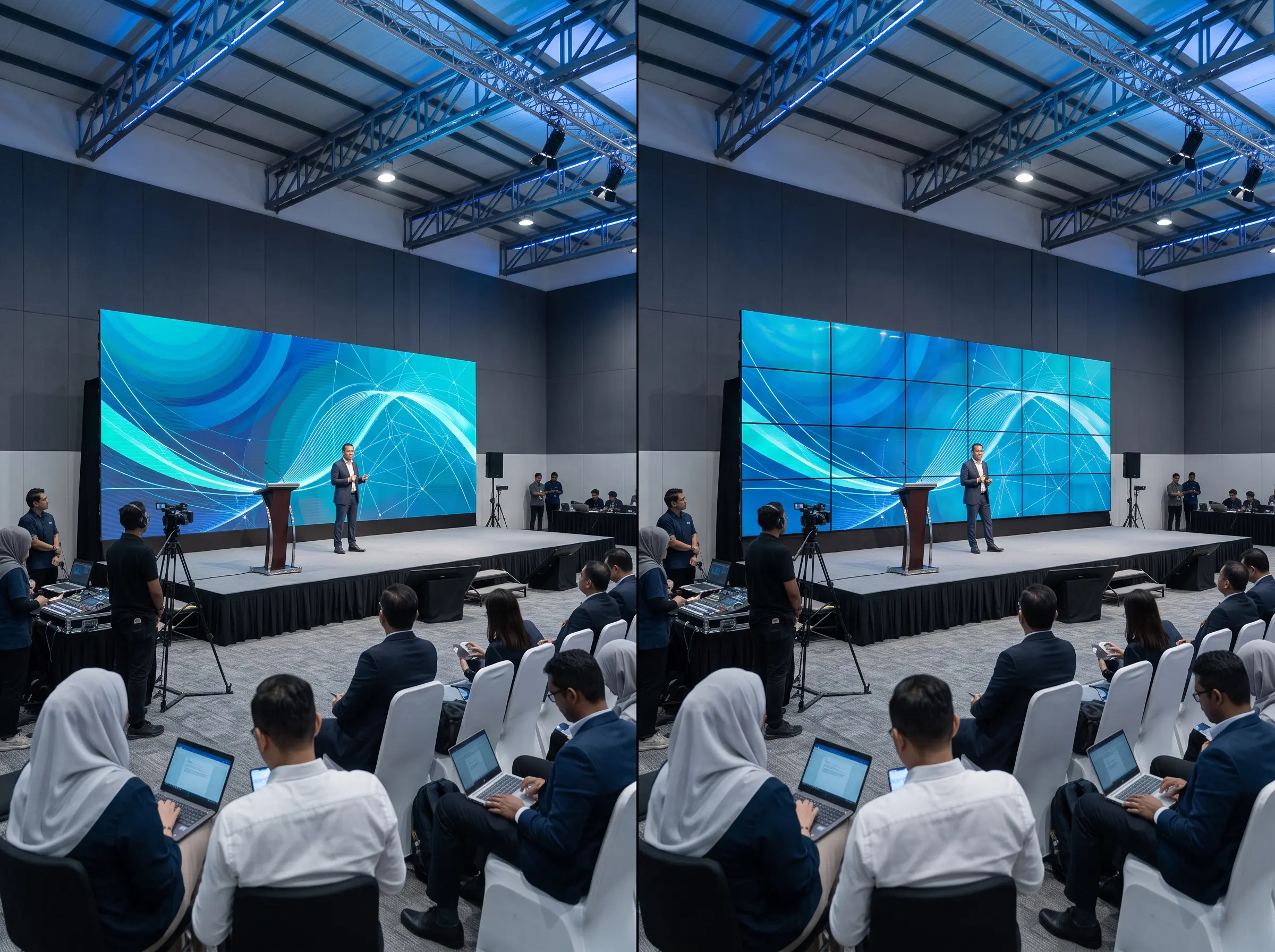
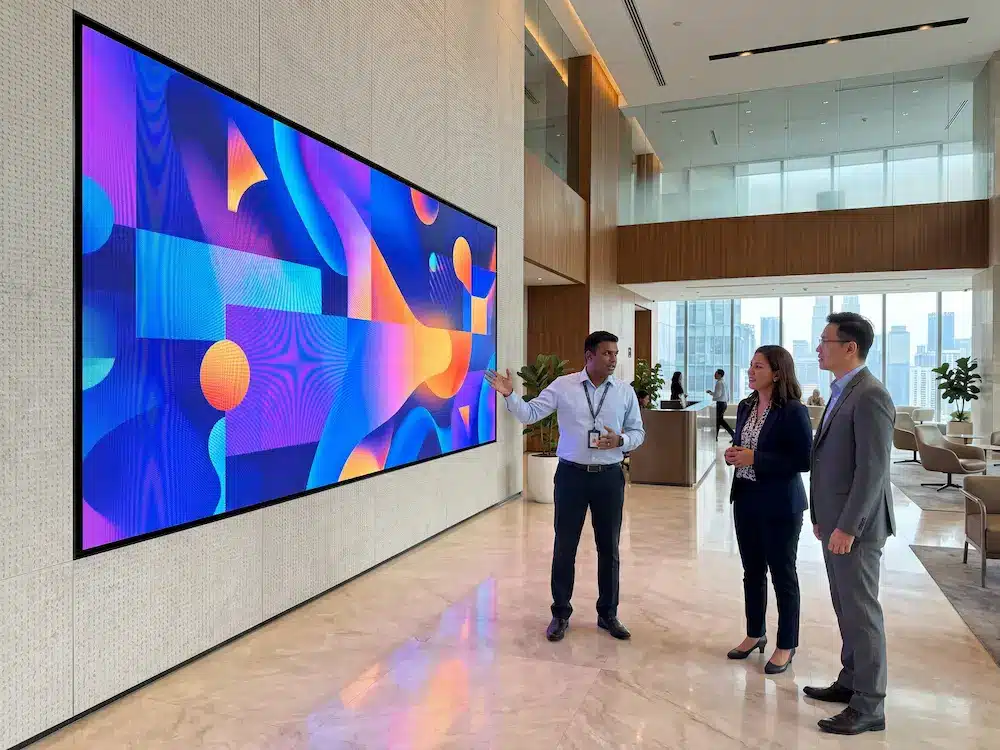
A screen in a lobby that cannot be read in daylight, a meeting-room display that requires three remotes, or a retail wall with visible panel gaps can undermine a project before the first message appears. LED displays are not simply larger screens. When planned around the environment, audience, and operating workflow, they become a practical communication system that helps organizations inform, guide, sell, monitor, and make faster decisions.
For Malaysian schools, corporate offices, public agencies, property operators, retailers, and event venues, the right decision starts well before choosing screen size. It starts with a clear answer to one question: what must people be able to see, understand, and do in this space?
LED Displays Are a Space Planning Decision
An LED display is often specified as a product purchase, but its success depends on the full deployment. The display, mounting method, power supply, network connection, content platform, control process, and maintenance access all need to work together. A technically impressive screen will not deliver much value if staff cannot update it quickly or if service access requires dismantling a finished wall.
Direct-view LED is particularly useful where scale, brightness, and visual impact matter. Unlike a conventional display built around a single LCD panel, an LED wall uses modular cabinets to create a large-format surface. This allows organizations to build custom dimensions for wide lobbies, command centers, auditoriums, façades, showrooms, and stage backdrops.
That flexibility comes with choices. A fine-pitch indoor LED wall can create a polished experience for visitors standing close to the screen, but it costs more than a screen designed for viewing from further away. An outdoor display needs greater brightness and weather protection, while an indoor boardroom may prioritize color consistency, quiet operation, and detailed presentation content. There is no universal best specification. There is a best fit for the site and use case.
Start With What the Screen Must Accomplish
The most effective projects begin with the communication objective, not a catalog of specifications. A school may need to share announcements, safety messages, student achievements, and event schedules in a central area. A corporate team may need live dashboards and video collaboration in a
control room. A property operator may need wayfinding, tenant promotions, and emergency notices across multiple buildings.
Public communication and visitor journeys
In reception areas, transit points, malls, hospitals, campuses, and government facilities, visibility and message clarity matter more than ultra-fine detail. The content should be readable at the normal viewing distance, with enough contrast to remain clear under ambient light. A large LED display can establish a strong arrival experience, but it should also help people move through the space with less confusion.
For example, a directory display can support wayfinding during the day and switch to event information after hours. A
digital signage network can deliver approved messages to several locations from one control point. The practical benefit is not the screen alone. It is faster publishing, consistent information, and fewer manual updates across the facility.
Collaboration, operations, and command centers
In meeting rooms and operations environments, screen reliability affects decision-making. Teams need to see data clearly, share a laptop or video conference feed without delay, and switch inputs without calling technical support. In these settings, LED walls can be paired with video conferencing, wireless presentation systems, room booking panels, and centralized AV control.
A large display is valuable when it lets everyone in the room see the same operating picture. This may be a production dashboard, security feed, project timeline, financial performance report, or incident status board. The display should support the way teams actually work, including long operating hours and quick handovers between users.
Retail, hospitality, and events
Retailers, restaurants, automotive showrooms, and exhibition organizers use LED screens to create attention at the point where customers make decisions. High-impact visuals can introduce a vehicle, promote a menu, show a product demonstration, or transform a launch event. Yet visual impact should not mean constant noise.
Content needs a clear hierarchy. Short messages, bold product imagery, and planned changes by time of day usually perform better than trying to place every offer on one screen. For events, confirm whether the display needs to show live camera feeds, presentation slides, sponsor content, or all three. That answer influences the processor, refresh rate, input capacity, and technical crew requirements.
How to Specify LED Displays for the Actual Site
Pixel pitch is one of the first specifications to discuss. It refers to the distance between LED pixels. A smaller pixel pitch creates a sharper image for viewers standing nearby, while a larger pitch can be appropriate for displays viewed from across a hall, roadway, or stadium. Selecting an unnecessarily fine pitch increases project cost without necessarily improving the audience experience.
Brightness is equally site-dependent. Indoor applications with controlled lighting need a different brightness level than a shopfront facing afternoon sun. Very high brightness indoors can be uncomfortable, waste energy, and shorten the useful operating life if it is not managed properly. Automatic brightness adjustment can help displays remain readable while operating sensibly across changing conditions.
Physical planning matters just as much as image quality. Before procurement, assess the wall structure, display dimensions, loading requirements, ventilation, cable routes, power availability, network access, and safe service clearance. Front-service cabinets are useful where there is no rear access. Rear-service designs can suit purpose-built rooms where maintenance space is available behind the wall.
Do not overlook viewing angles, color calibration, refresh rate, and content resolution. A command center that shows detailed maps has different needs from an outdoor advertising board. A venue that records events on camera should consider refresh performance to avoid visible scan lines or flicker in video footage. These are small technical decisions with a visible effect on everyday use.
Content and Control Determine Ongoing Value
A display that shows the same image for months becomes expensive wallpaper. Organizations should decide who owns content, who approves it, how often it changes, and what happens when an urgent notice is required. This is especially relevant for multi-site organizations that need brand consistency without creating an approval bottleneck.
A suitable content management system lets authorized users schedule content by location, time, and audience. It can support routine playlists for promotions or announcements, while allowing priority messages to take over when needed. For operational teams, centralized monitoring can also show whether screens are online and displaying correctly.
The content itself should be designed for the display format. A presentation slide created for a laptop rarely translates well to a wide LED wall. Use readable font sizes, high-contrast color combinations, concise wording, and media sized to the screen’s native resolution. If the audience is moving, they should understand the message within a few seconds.
Plan the Integration, Not Just the Wall
The strongest LED projects connect with the wider environment. A corporate lobby wall can combine branded content with room availability, visitor announcements, and live business updates. A smart classroom can pair a large visual display with
interactive smartboards and wireless sharing. A control room can bring together data sources, cameras, collaboration tools, and alerting systems on one visual canvas.
Integration should remain practical. Every additional source, controller, or software platform introduces a support requirement. Specify only the functions that users will genuinely rely on, then make those functions simple to operate. A facilities team should not need an AV engineer to start a scheduled message sequence or switch a room into presentation mode.
What Procurement Teams Should Confirm
A comparable quotation should cover more than screen dimensions and price. Before approving an LED project, confirm these points:
- The recommended pixel pitch, brightness, and cabinet design match the documented viewing distance and environment.
- Structural, electrical, networking, ventilation, and access requirements have been surveyed on site.
- The proposal includes the controller, mounting structure, cabling, installation, calibration, testing, and user training.
- Warranty terms, replacement parts availability, response expectations, and preventive maintenance responsibilities are clearly defined.
- The content platform and control workflow can be used by the teams responsible for daily communication.
These details protect the organization from unexpected variations during installation and avoid the common problem of receiving a screen without a workable operating model.
Choose Accountability Along With Technology
LED deployments are long-term infrastructure, particularly when they are installed in public-facing areas or operationally critical rooms. Local engineering coverage, clear service-level commitments, and proven installation experience should carry real weight in the decision. The lowest hardware price may not be the lowest cost if downtime, content issues, or inaccessible service arrangements disrupt operations later.
For Malaysian organizations, working with an end-to-end technology partner also simplifies coordination across AV, IT, facilities, and operations teams. Arvia brings more than 15 years of experience and over 4,500 completed projects to this process, with certified field engineers and support coverage across all 13 states. That matters when a project needs site assessment, system integration, installation, staff familiarization, and accountable after-sales service rather than a box delivered to the door.
The most useful LED display is the one that remains clear, current, and dependable long after launch day. Start with the audience standing in front of it, then build the technology around the decision, journey, or message they need from that moment.